The outcome
- Recruiters open their queue to a pre-sorted list — the strongest candidates surface immediately.
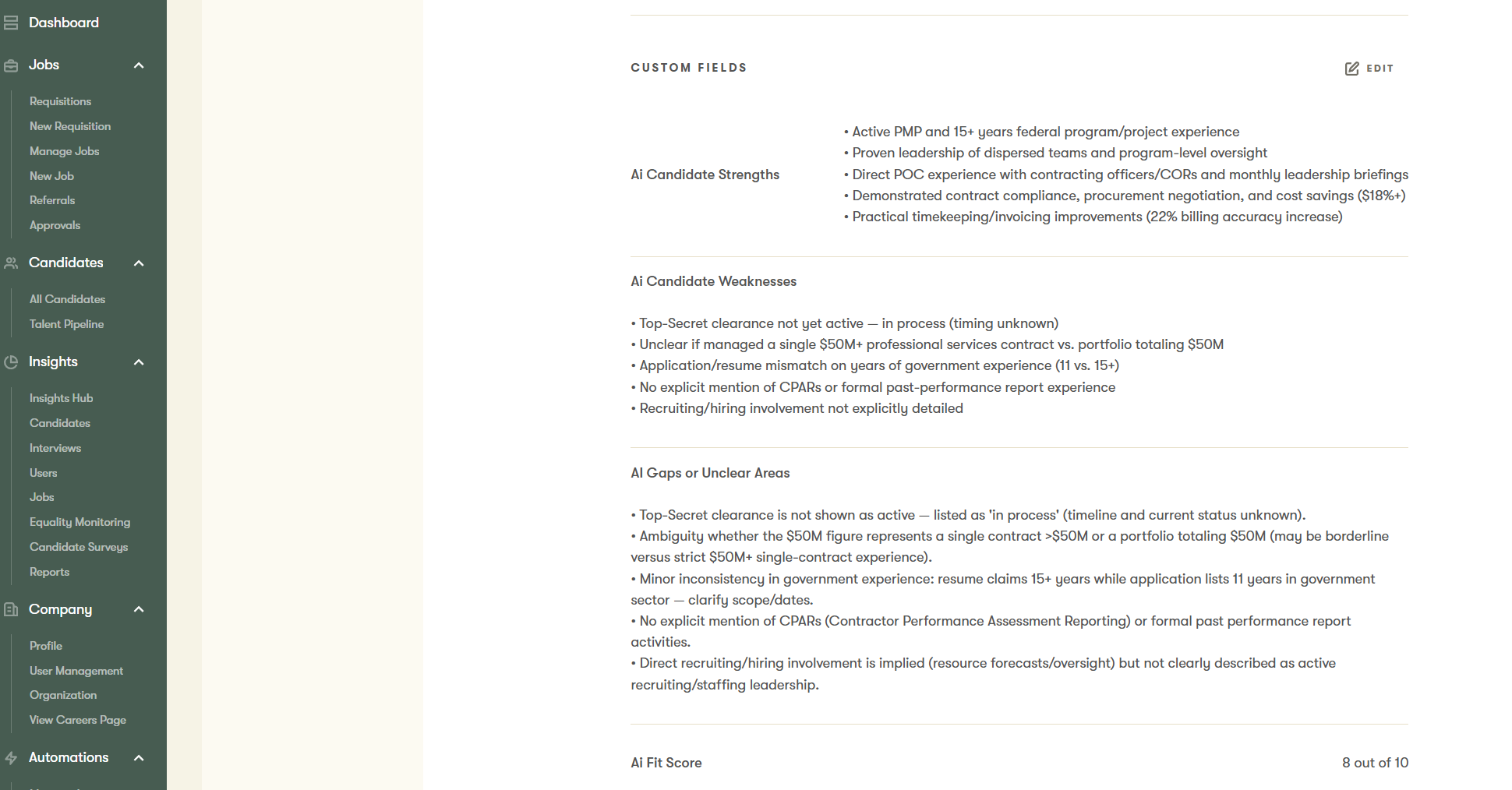
- Every application gets a 0–10 fit score plus a short narrative on strengths, gaps, and what to probe in a screen.
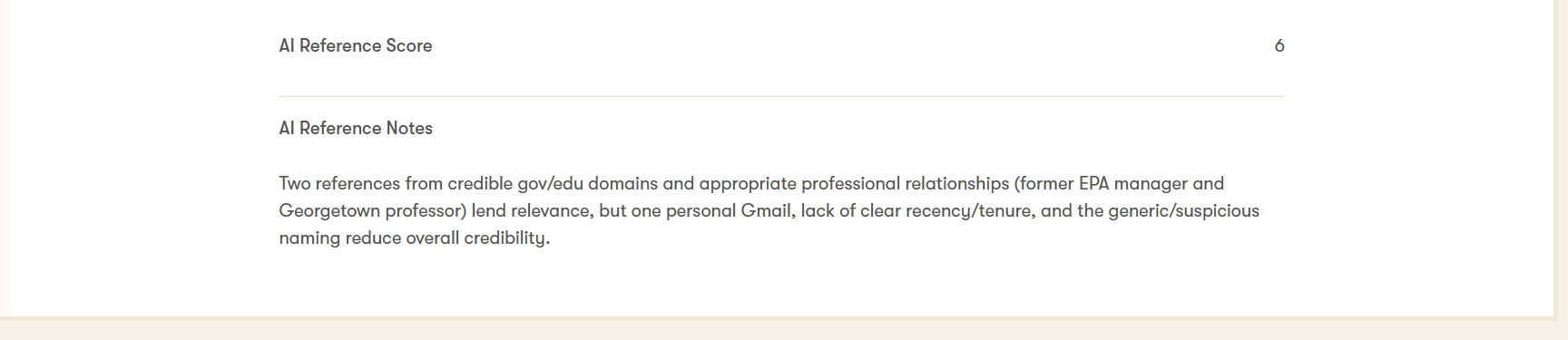
- Reference quality is scored automatically, separating professional-grade references from personal ones.
- The team spends less time reading resumes and more time on the candidates that matter.
- The system runs in the background — nobody has to remember to use it.
The situation
The firm hires across dozens of government contracting roles at once. Every job has its own technical criteria, clearance requirements, and must-haves buried in the description. Applications were coming in faster than anyone could read them, and there was no way to tell a 3 from a 9 before opening the file.
They had just migrated from ADP Recruitment to Pinpoint as their ATS. That transition was the opening to build something on top of the system rather than around it.
What the system does
When an application lands in Pinpoint, an AI workflow runs automatically. It reads the job posting, extracts the actual hiring criteria (not just keywords), scores the candidate against those criteria, and writes the result back into a custom field recruiters already see in their normal review queue. A short narrative summarizes strengths, weaknesses, and the gaps worth asking about.
A second workflow evaluates the references each candidate provides. Professional addresses and verified business relationships score higher than personal emails or family contacts — so recruiters see at a glance which references are worth a call.